
Capital Gains (CGT) Calculator
Step 1 of 3: Asset Details
Asset Details
Your Situation
Results
How Capital Gains Tax Calculation Works
How Your CGT is Calculated in Australia
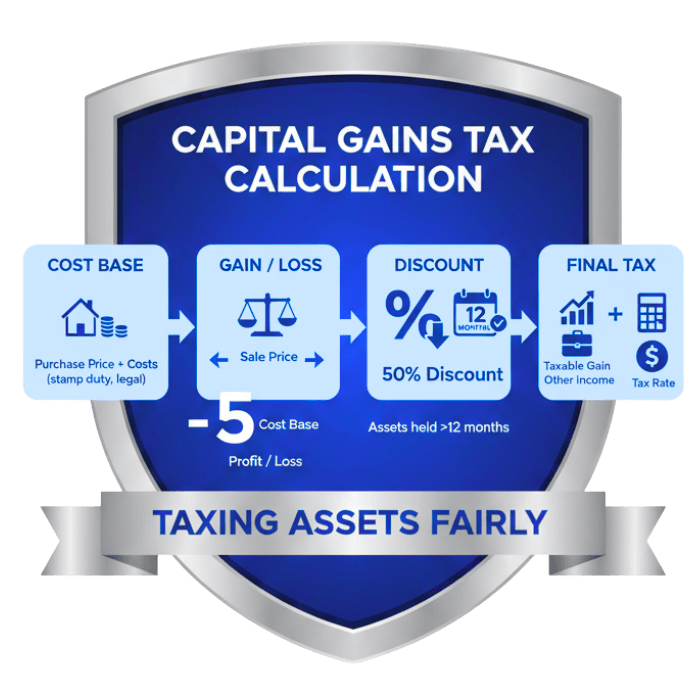
- Calculate the Cost Base:This is the initial purchase price plus all associated buying and selling costs (like stamp duty and legal fees).
- Determine Capital Gain or Loss:Subtract the total cost base from the final sale price.
- Apply Losses and Discounts:First, subtract any available capital losses. Then, if you've held the asset for over 12 months, apply the 50% CGT discount to the remaining amount.
- Calculate Final Tax:The resulting amount is your 'taxable capital gain'. This is added to your income for the year and taxed at your personal marginal tax rate.
Capital Gains and Taxes: FAQs
How Your Capital Gains are Taxed in Australia
Capital Gains Tax (CGT) is not a separate tax; your net capital gain is simply added to your total assessable income and taxed at your marginal tax rate. This means the actual tax you pay depends on how much you've earned from other sources (like your salary) in the same financial year.
Crucially, if you have held an asset for more than 12 months, you are generally eligible for the 50% CGT discount. This reduces the gain added to your income by half, effectively cutting your tax liability on that profit in two.
Calculating the Cost Base
Your cost base includes the purchase price + stamp duty + legal fees + agent commissions. A recorded high cost base reduces your final taxable gain.
Capital Losses
You can use capital losses to offset current or future capital gains. Note that losses must be applied against the gain before you apply the 50% CGT discount.
CGT Checklist
- ✓Is the asset your Main Residence? (Exempt)
- ✓Did you hold it for 12+ months? (Discount)
- ✓Are you an Australian Resident? (Eligibility)
Capital Gains Tax Australia – FAQs
Answers to specific questions about this tool.
Related Investment Tools
Managing capital gains is just one step in optimizing your overall investment tax position.